In brief: getting to work safely in winter
- Slow down: In winter, however, it is worth slowing down and paying more conscious attention to our surroundings.
- Footwear: Shoes with soles that give good grip can reduce the risk of slipping.
- Driving: Because of frozen road surfaces, snow, slush and poor visibility, it is especially important to adjust our speed to the road and weather conditions and to keep a sufficient following distance.
- At the workplace: On the workplace premises the employer must ensure the conditions for safe movement, especially in car parks, at entrances, on ramps and along the traffic routes inside the building.
- Commuting accidents: It is important to know that, under Hungarian rules, accidents that happen on the way to or from work may, if certain conditions are met, qualify as commuting accidents, that is, as occupational accidents.
- If it happens: If we have an accident on the way to work or on the way home, it is important to seek medical help immediately if needed and to inform our employer of what happened as soon as possible.
When people think of occupational safety, most first picture the workplace, protective equipment, machines and work processes. Yet preparing for safe work starts long before we step through the workplace gate. In winter it is especially worth paying attention to how we get to work and how we travel home.
One of the most common hazards of cold weather is a slippery, icy pavement or road surface. A patch of ice that looks harmless at first can be enough to make us lose our balance. And a fall can mean more than a minor bruise: it can easily lead to a sprained ankle, a broken wrist or arm, or an even more serious injury.
Experience shows that we are often least careful precisely where we have “got used to” the danger. We know the route, we know where the pavement is, and so we tend to move on autopilot. In winter, however, it is worth slowing down and paying more conscious attention to our surroundings. Icy surfaces are not always visible, especially in the dark or under freshly fallen snow.
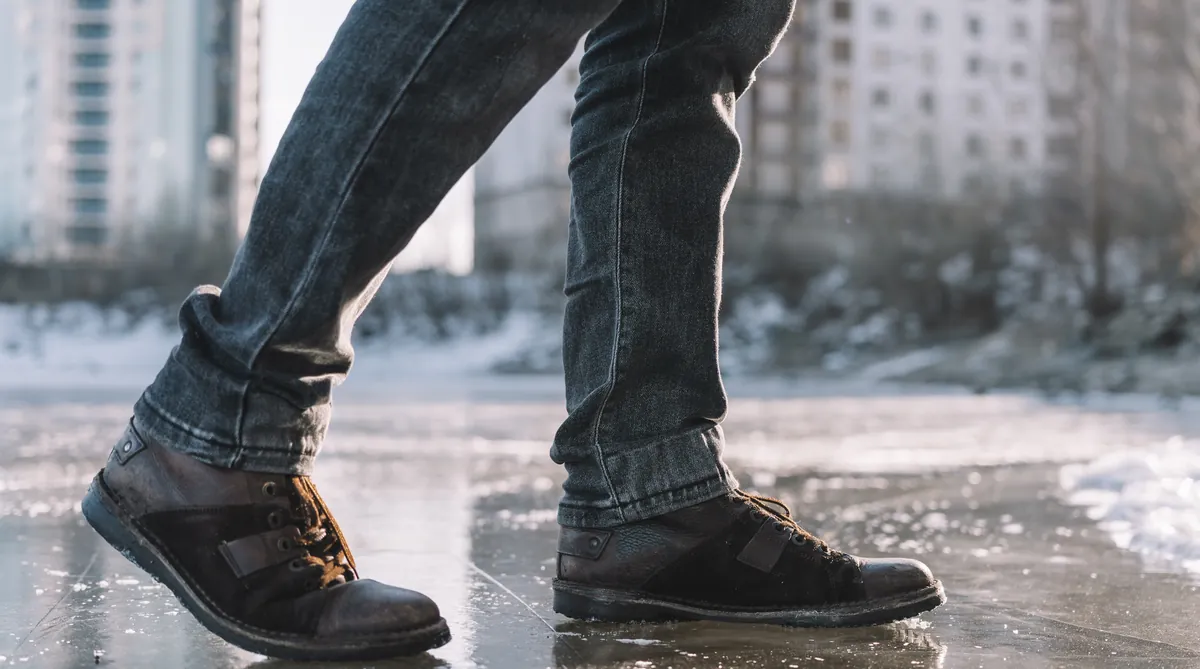
Choosing the right footwear also matters. Shoes with soles that give good grip can reduce the risk of slipping. Shoes with smooth or worn soles can be especially dangerous in winter. If we regularly walk in winter, it is worth choosing footwear whose soles grip well on wet, snowy and slippery surfaces too.
But we need to be careful not only as pedestrians. When travelling by car or on two wheels, winter road conditions bring further hazards. Because of frozen road surfaces, snow, slush and poor visibility, it is especially important to adjust our speed to the road and weather conditions and to keep a sufficient following distance.
Even after arriving at work, we should not forget about the hazards. On the workplace premises the employer must ensure the conditions for safe movement, especially in car parks, at entrances, on ramps and along the traffic routes inside the building. As employees, we can also help prevention by reporting dangerous, icy or slippery surfaces.
It is important to know that, under Hungarian rules, accidents that happen on the way to or from work may, if certain conditions are met, qualify as commuting accidents, that is, as occupational accidents. We speak of a commuting accident when an employee has an accident on the way from their home (or lodging) to their workplace, or from their workplace back home. This can happen, for example, while walking, on public transport or while travelling in their own vehicle.
One important condition for a commuting accident to be recognised as an occupational accident is that the employee travels by the shortest, or the usual and reasonable, route and does not interrupt the journey without good reason. Whether an interruption was justified is always assessed on the basis of the circumstances. For example, picking up a child from nursery or doing everyday shopping may count as a justified interruption.
If we have an accident on the way to work or on the way home, it is important to seek medical help immediately if needed and to inform our employer of what happened as soon as possible. It is worth noting down the exact place, time and circumstances of the accident, and keeping any medical documents.
If the accident is recognised as an occupational accident and the legal conditions are met, the employee may be entitled to accident sick pay.
One of the simplest rules of prevention: don't rush on dangerous stretches. Many accidents happen when someone is running late, hurrying for the bus, to work or home, and as a result does not pay enough attention to the road conditions.
It is also worth remembering that the cold, poor visibility and slippery surfaces endanger not only us but also those around us. Let's look out for each other, and if a colleague is moving unsteadily on an icy stretch, let's warn them.
Occupational safety does not start when the access card is read at the workplace, and it does not end at the end of the shift. Safe work also means arriving at our workplace unharmed and setting off home just as safely, without injury.
So in winter let's look out for each other more, travel carefully, choose suitable footwear and not underestimate the dangers of ice, snow and cold. A few extra minutes of attention can help prevent more serious injuries and their long-lasting consequences.