In brief: the 8 lessons
- Everyday accidents: A hazard is not dangerous because it is spectacular.
- Routine: Experience matters, but it does not replace constant attention.
- Not only factories: Every workplace has risks; they are just not the same everywhere.
- How fire spreads: The sooner we detect the danger, the more time is left to intervene and to escape.
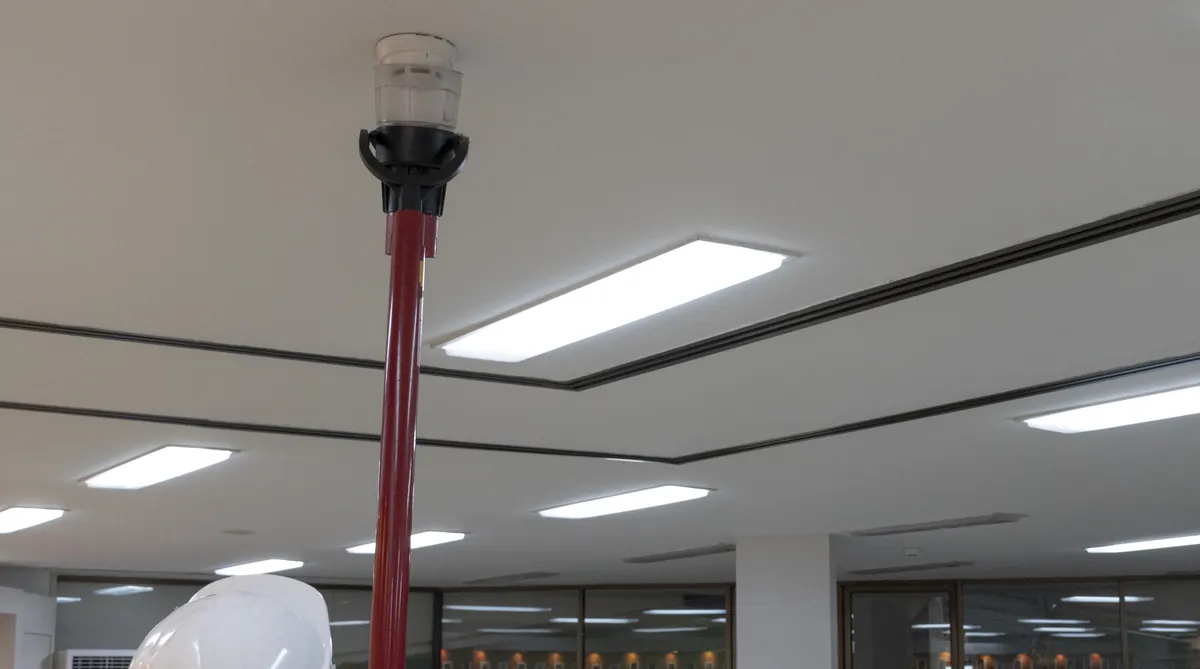
- Smoke detectors: An early warning can buy valuable time.
- Damage and downtime: Fire prevention is not only about protecting life; it is also about preventing material damage and lost operations.
- Outdoor work: Both the work location and its surroundings are part of the risk assessment.
- Carbon monoxide: Some hazards can be neither seen nor sensed, so prevention has to rest on technical and organisational measures.
12 facts and cases about workplace fire and occupational safety – Part 2
We often talk about occupational safety only once an accident has already happened. Yet prevention is precisely about recognising hazards before something goes wrong.
Behind every statistic there are people, workplaces and everyday work processes. That is why it is worth looking at what the numbers and everyday situations can teach us.
1. Workplace accidents are not only major industrial disasters
In Hungary more than twenty thousand workplace accidents involving more than three days of incapacity are recorded every year. According to official data, 21,252 such workplace accidents occurred in 2025.
A workplace accident, however, is not necessarily the result of some extraordinary, spectacular event. Many happen during everyday work: because of a slip or a fall, a fall from height, materials handling, use of machinery or an unsuitable working method.
That is why one of the most important tasks of occupational safety is not to focus only on rare, serious events, but to take everyday risks seriously as well.
LessonA hazard is not dangerous because it is spectacular.
2. Routine does not make anyone invulnerable
Experience is a great advantage at work. An experienced worker handles many situations faster and with more confidence.
Routine, however, can also be a source of danger.
Something a person has done the same way a hundred times becomes easy to do on autopilot. At such times we are less likely to notice small changes and altered circumstances.
A new working environment, a changed work process, a faulty tool or even an unusual situation can pose a risk that is easier to overlook when we rely on routine.
One important task of occupational safety is therefore to break this autopilot from time to time: through training, inspection, practice and reassessment of the risks.
LessonExperience matters, but it does not replace constant attention.
3. Occupational safety is not only a problem for factories
When people think of workplace accidents, many first picture a factory, a construction site or a hazardous industrial environment.
Yet an office, a warehouse, a workshop or a retail workplace also holds risks.
A trip, a badly stored object, a faulty electrical appliance, a poorly designed working environment or even a moment of inattention can cause an accident.
Risks naturally differ from workplace to workplace. In an office we meet different hazards than on a construction site or in a warehouse, but prevention matters in every working environment all the same.
LessonEvery workplace has risks; they are just not the same everywhere.
4. A fire can change the situation completely within a few minutes
At first a fire often looks surprisingly small.
The 1987 tragedy at King's Cross underground station also shows clearly that a fire that seems limited at first can grow much stronger within a short time.
How fast a fire spreads can depend on many factors: the presence of combustible materials, the layout of the surroundings, ventilation, and how quickly the fire is detected and how people respond to it.
That is why early detection and an immediate, appropriate response are important.
LessonThe sooner we detect the danger, the more time is left to intervene and to escape.
5. A smoke detector is valuable while the fire is still small
A fire does not necessarily become dangerous only when we can see the flames.
In many cases smoke appears already in the early stage of a fire, and it can be a serious danger, especially in an enclosed space.
According to data from the Hungarian disaster management authority for the first nine months of 2025, 4,739 residential buildings caught fire, and only eight of them had a smoke detector.
In the same period 561 homes became uninhabitable, forcing 1,860 people to leave their homes.
One of the most important advantages of a smoke detector is that it can raise the alarm in time, while there is still a chance to react quickly and escape.
LessonAn early warning can buy valuable time.
6. A fire can have serious consequences even if nobody is injured
The consequences of a fire cannot be measured only by the number of injuries and deaths.
A fire in a building can make homes or workplaces unusable, interrupt the operation of businesses and force people to leave their familiar surroundings temporarily.
According to the disaster management authority, 561 homes in Hungary became uninhabitable in the first nine months of 2025, affecting 1,860 people.
This shows clearly that the consequences of a fire can reach far beyond the fire itself.
In a workplace, a more serious fire can cause not only personal injury but also significant material damage, a longer shutdown and even serious disruption to the running of a business.
LessonFire prevention is not only about protecting life; it is also about preventing material damage and lost operations.
7. Outdoor work has fire risks too
In dry and hot weather an outdoor fire can spread quickly.
Farmland, forests, machines, stored materials and buildings can all be put at risk. When planning the conditions of the work, the fire hazard of the surroundings must therefore be taken into account as well.
This is especially important for work that produces heat, sparks or open flame.
The work location therefore cannot be assessed on its own: the surroundings, the weather, nearby combustible materials and the work process itself can all affect the risk.
LessonBoth the work location and its surroundings are part of the risk assessment.
8. You cannot smell carbon monoxide
Carbon monoxide is a colourless and odourless gas, so our senses cannot reliably detect its presence.
The danger is not limited to homes. Internal combustion engines, generators and work machines running in enclosed or poorly ventilated spaces can also produce carbon monoxide.
Adequate ventilation, maintenance of equipment and – where justified – suitable detection are therefore important safety issues in the workplace as well.
This needs particular attention in work areas where equipment with internal combustion engines is used in enclosed or partly enclosed spaces.
LessonSome hazards can be neither seen nor sensed, so prevention has to rest on technical and organisational measures.
What do these examples show?
The numbers and the everyday examples point to the same thing: occupational and fire safety do not matter only once something has gone wrong.
Recognising hazards, the right working method, regular inspection, maintenance and training are all part of prevention.
Good occupational safety is not necessarily spectacular. Often it works best precisely when nothing unusual happens: a fault is spotted in time, a dangerous working method is corrected, a broken tool is taken out of use, or a worker knows what to do in an emergency.
In the next, third part we look at how all this comes together into a working safety culture – and why good occupational safety is more than simple paperwork.